Dana Hansen · 11 October 2026
Adaptive Quest Mechanics Drive Retention Shifts in Non-Traditional Learning Environments
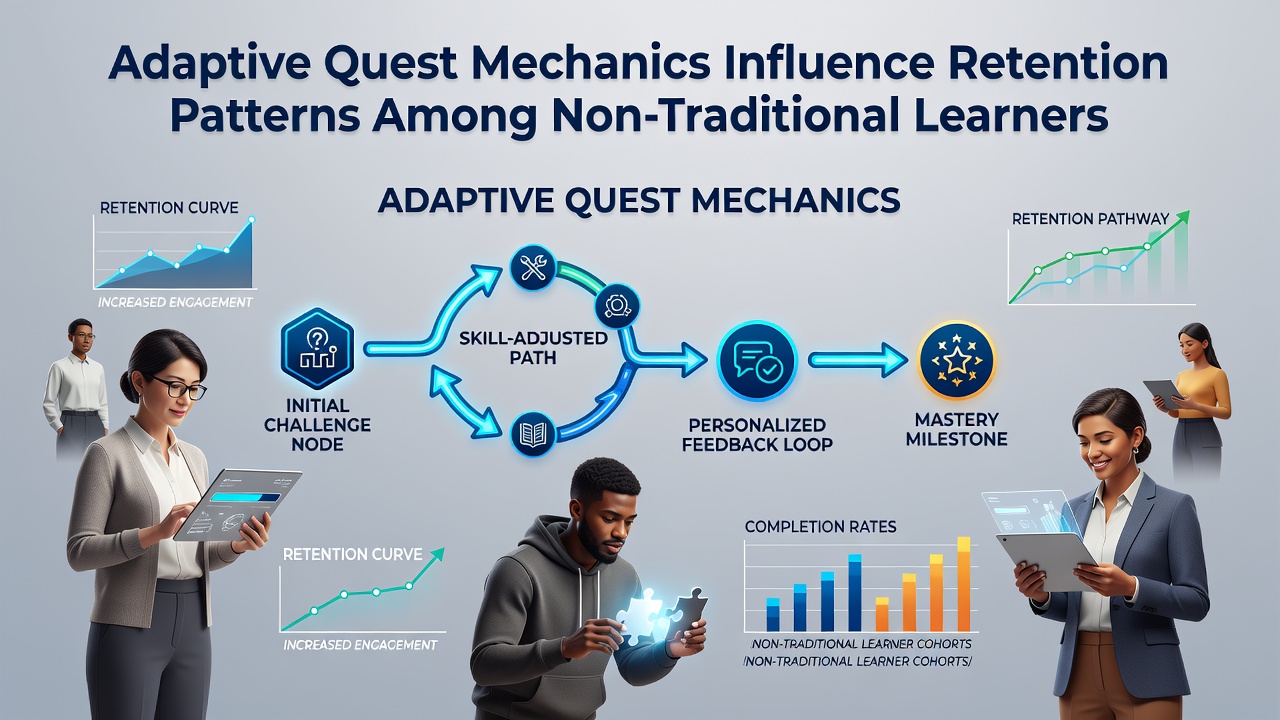
Adaptive quest mechanics integrate game-like structures with personalized learning adjustments that respond to individual progress and preferences, and this approach has gained traction in programs designed for non-traditional learners who balance studies with work, family, and other responsibilities. These systems track user interactions in real time, then modify quest difficulty, pacing, and rewards to maintain engagement without overwhelming participants who often enter courses with varied prior knowledge and irregular schedules.
Core Elements of Adaptive Quest Design
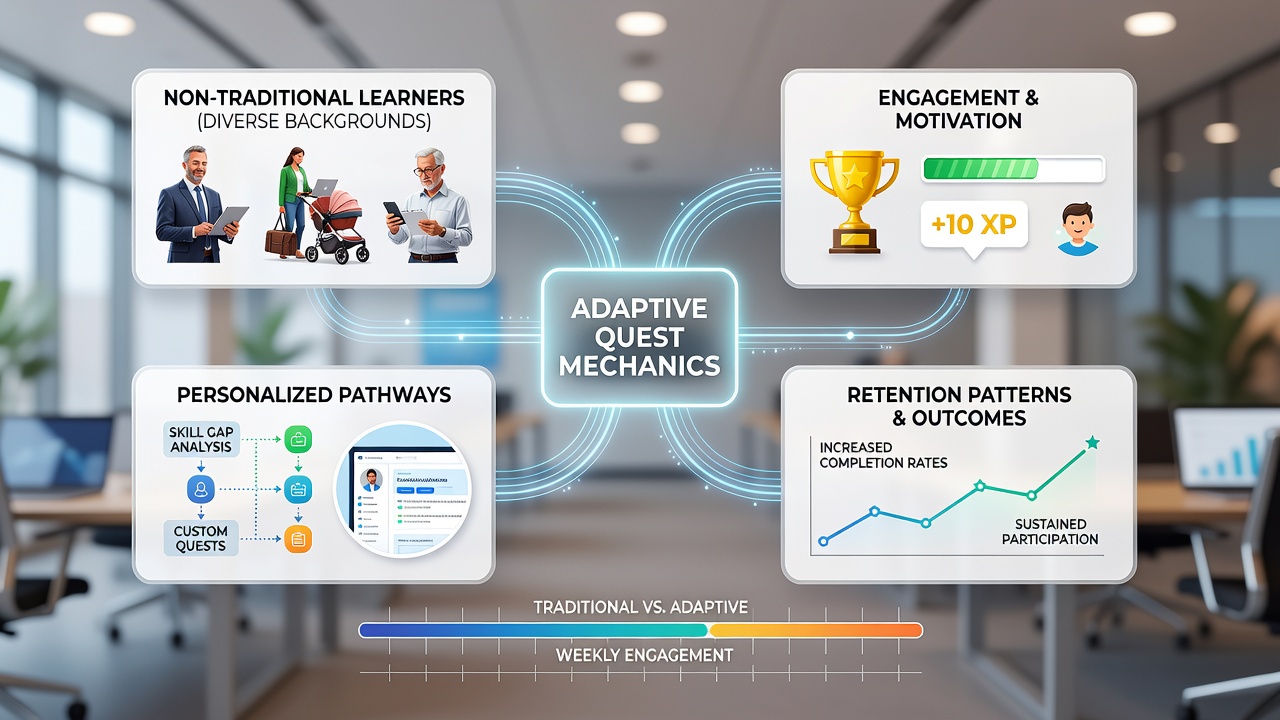
Quest mechanics typically break course content into modular challenges that unlock sequentially based on demonstrated mastery, while adaptive layers use algorithms to alter pathways when learners struggle or excel at specific tasks. Data shows that completion rates improve when systems adjust quest length and complexity according to session duration patterns recorded from past interactions, and researchers at several institutions have documented how this responsiveness reduces dropout among students aged 25 and older who return to education after career breaks.
One study released in early 2026 examined platforms serving working adults across multiple continents and found that retention climbed when quests incorporated branching narratives tied to real-world applications, such as project management simulations that scale in scope depending on user performance metrics. Those implementations also embedded progress dashboards that display cumulative achievements, which helps learners visualize advancement even during periods of inconsistent study time.
Retention Data Across Diverse Cohorts
Figures from adult education initiatives indicate that programs incorporating adaptive quests see average retention increases of 18 to 24 percent compared with static course formats, particularly in online formats where participants lack regular classroom accountability. According to reports compiled by the U.S. Department of Education on non-traditional enrollment trends, learners who engage with dynamic quest structures complete modules at higher rates when the system reduces quest volume during high-stress periods detected through login frequency and self-reported availability inputs.
What's notable is how geographic variations appear in outcomes. Australian vocational training providers have reported similar patterns, with adaptive elements helping mature students maintain momentum across multi-year certification tracks. In parallel, Canadian community college data reveals that quests adjusted for cultural and linguistic diversity further support retention by offering alternative pathways that respect varied life contexts.
Implementation Patterns Observed in 2026
By October 2026 several European research consortia had released findings from pilot programs that layered adaptive quests onto existing online degree pathways, and those reports highlighted measurable drops in attrition during the critical first eight weeks of enrollment. The adjustments often involved shortening initial quests for participants who logged in after evening work shifts, then gradually increasing complexity as consistency improved.
Industry analyses from organizations such as the European Association of Distance Teaching Universities note that feedback loops within quests, including immediate hints or optional scaffolding, correlate with sustained participation among learners managing caregiving duties. These features operate without altering core learning objectives, which preserves academic rigor while accommodating external demands that frequently interrupt traditional study sequences.
Challenges and Measured Responses
Implementation requires careful calibration because overly frequent adjustments can create perceptions of inconsistency, and some cohorts have shown temporary dips in motivation when quests felt too personalized or unpredictable. Research indicates that transparency features, such as brief explanations of why a quest changed, help mitigate those effects and restore engagement levels within subsequent sessions.
Longitudinal tracking across multiple semesters demonstrates that retention benefits compound when adaptive quests integrate with support services like tutoring referrals triggered by stalled progress indicators. Observers note that programs combining these elements report lower withdrawal rates during peak life-transition periods, including job changes or family events that commonly affect non-traditional learners.
Conclusion
Adaptive quest mechanics continue to influence retention patterns by aligning course structures with the unpredictable realities faced by non-traditional learners, and ongoing data collection from diverse educational settings will clarify which specific adjustments yield the most consistent results across populations and regions. As platforms refine their algorithms, the focus remains on maintaining educational standards while supporting sustained participation through responsive design choices.