
Tina Roth · 27 September 2026
Library Collaborations Driving Structured Challenges in Cross-Cultural Exchanges
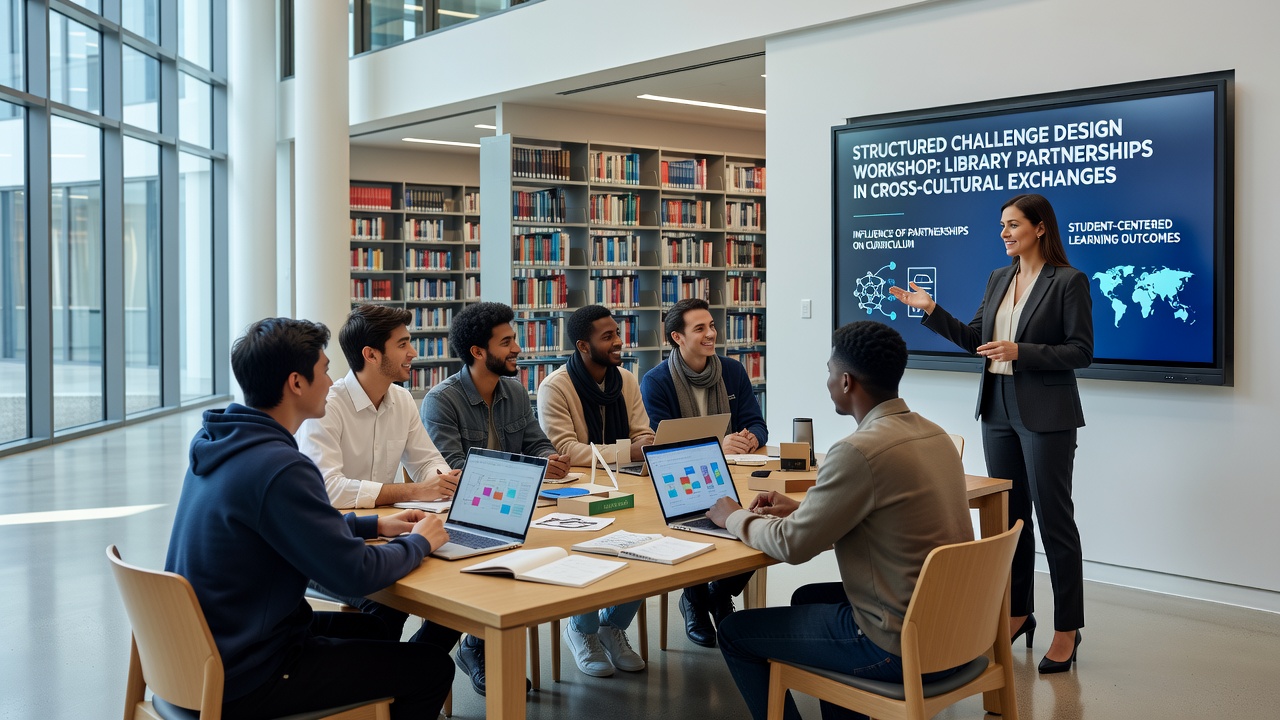
Library partnerships have taken on expanded roles in recent years as institutions seek to embed cultural awareness into structured challenges for student exchanges, and these collaborations often begin with shared access to archival collections and digital databases that allow designers to incorporate region-specific references without relying on surface-level stereotypes. Data from multiple university networks show that when libraries from different countries coordinate on resource curation, challenge modules gain layers of authenticity because participants encounter primary documents and multimedia artifacts directly tied to the exchange locations.
Building Foundations Through Resource Sharing
Cross-cultural exchanges depend on challenges that test problem-solving skills while respecting diverse perspectives, and libraries contribute by supplying vetted materials that reflect local histories and contemporary issues. Partnerships between academic libraries in Europe and Asia, for instance, have produced joint repositories where exchange organizers draw case studies on topics such as urban sustainability or migration patterns, and these collections reduce the risk of culturally mismatched prompts because each item undergoes review by subject specialists from both sides. Observers note that such resource pooling has accelerated since 2023, with several consortia reporting increased usage of co-curated datasets during planning phases for programs launching in September 2026.
Designing Challenges with Cultural Precision
Structured challenges in student exchanges typically follow sequences of inquiry, collaboration, and reflection, yet the library input often determines whether those sequences align with participant backgrounds. Teams that include librarians from partner institutions can flag potential sensitivities early, such as avoiding references that carry unintended political weight in certain regions, and they also introduce elements like multilingual glossaries or annotated timelines that support deeper engagement. Research indicates that exchanges incorporating these library-informed adjustments see higher completion rates, because students spend less time clarifying context and more time applying critical thinking to the core tasks.
Case Examples from Recent Initiatives
One program involving universities in Canada and Australia integrated library partnerships to create challenges around environmental policy, and the resulting modules featured comparative data sets from both national archives that allowed students to map policy differences without external guidance. Another effort in South America and Scandinavia used shared digital exhibits on indigenous knowledge systems, which librarians helped format into progressive challenge stages that built from basic comprehension to collaborative synthesis. These instances demonstrate how library involvement shifts design from generic templates toward context-rich frameworks, and figures from exchange coordinators reveal that such adaptations correlate with stronger post-program feedback on cultural competence gains.
Evaluating Outcomes and Scaling Efforts
Assessment of these partnerships often tracks metrics such as participant retention and self-reported learning gains, and data compiled by international library organizations point to measurable improvements when challenges draw on verified cross-border holdings. Starting in September 2026, expanded pilots will test whether larger-scale collaborations can maintain the same level of detail across more institutions, with preliminary plans calling for standardized metadata protocols that speed up material integration. Those who've studied the process observe that success hinges on sustained communication channels between library staff and exchange planners, because ad-hoc arrangements tend to produce shallower cultural references than ongoing joint working groups.
External evaluations from bodies like the International Federation of Library Associations have documented similar patterns across multiple continents, while a separate report from Canadian research networks highlights how library-supported challenges enhance digital literacy alongside intercultural skills. Both sources emphasize the value of iterative feedback loops that allow designers to refine prompts based on real exchange data rather than assumptions.
Conclusion
Library partnerships continue to shape the architecture of structured challenges in cross-cultural student exchanges by supplying precise resources and cultural safeguards that generic design processes often overlook. As programs prepare for the next cycle beginning in September 2026, the emphasis remains on coordinated collection development and shared review practices that embed factual depth into every stage of participant activity. These approaches, grounded in documented resource coordination and outcome tracking, provide a replicable model for institutions seeking to strengthen exchange outcomes through sustained institutional ties.